Backtracking is a blogging project that I’m embarking on in 2024 in which I will play one game from each year since I was born. My goal is to engage with games I’ve never played and divert some of my attention away from new releases and towards older titles. I hope to cross off some major backlog items, learn more about the influences and intertexts that informed the games I grew up with, and practice my analytical skills. I’m using US release dates as the relevant year for my selections.
Why I Chose It
As I get further into this project, I’m reaching an inflection point: The mid-to-late aughts precedes the indie explosion of the 2010s, but it was a time that I was actively seeking out and playing all sorts of games. The list of options for 2005 had relatively few that really felt like glaring backlog gaps for me. To put it more simply: I don’t have many titles from this time that I missed and still think about returning to. Admittedly, that’s probably a gap in my curiosity—there were a colossal amount of games on the PS2 alone in these years.
Either way, I think it’s fair to say that Resident Evil 4 is one of the more significant mainstream releases of 2005. Before playing it this past month, I hadn’t put much time into any Resident Evil titles. This makes it additionally interesting to start here: Resident Evil 4 exists at an inflection point in the series itself. It’s a huge shift from the fixed-camera horror of previous titles towards more finely controlled movement and action-oriented gameplay. For good or for ill, that means that I was approaching it as it is, without any prior or subsequent titles to compare it to.
And of course, like several of my previous selections, Resident Evil 4 has recently been lavishly remade from the ground up. I find myself wondering: why did this need a remake, and for whom is the remake designed? Is it enough to just go play a mid-aughts classic, or must it be modernized somehow before it can be approached by new players? Honestly, I think it holds up just fine.
What I Thought
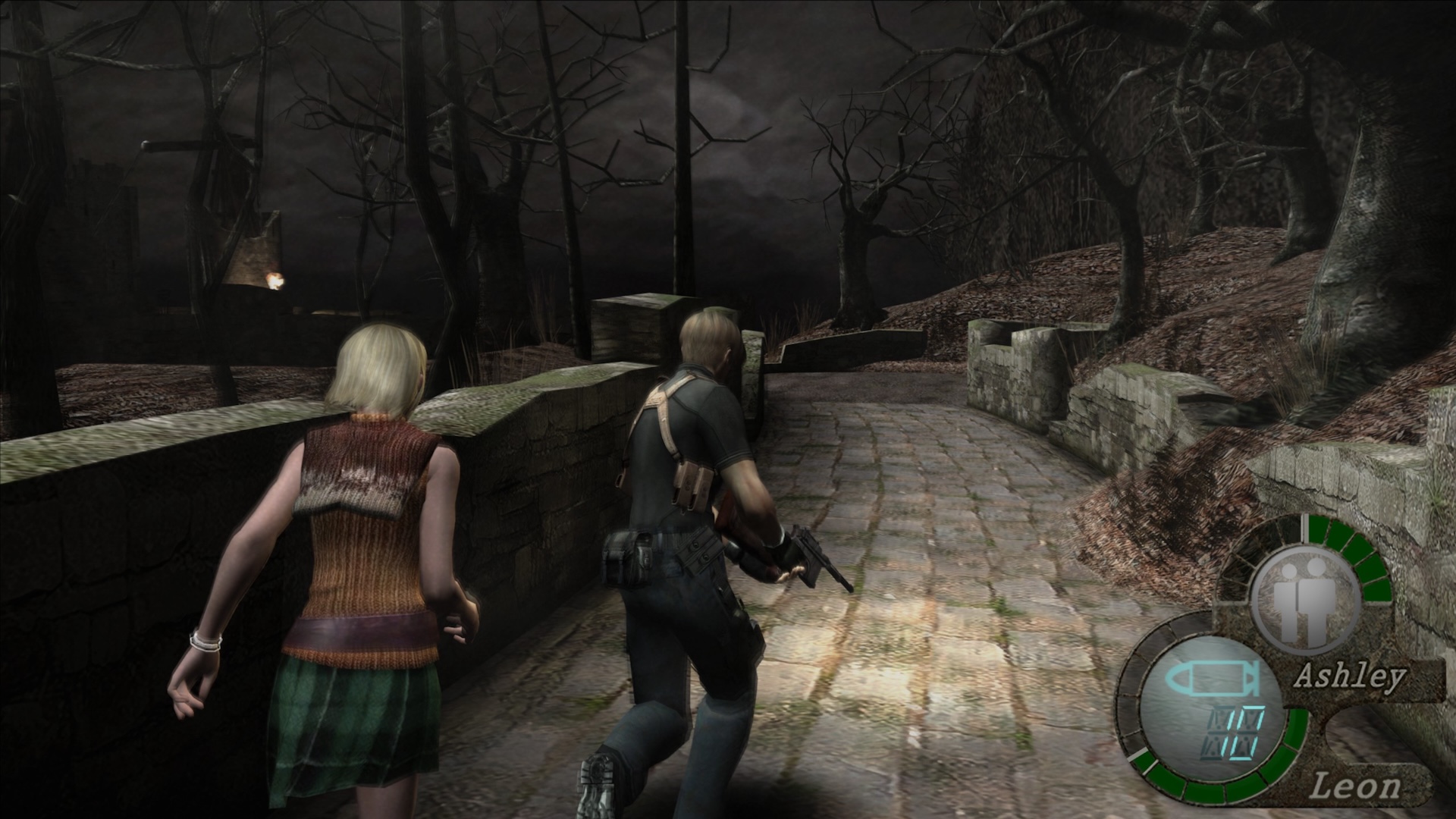
I remember trying out RE4 at a friend’s house not too long after it came out. I got stuck on an early sequence with a chainsaw-wielding villager, the first set piece fight against a more durable and dangerous enemy, not to mention a good number of regular enemies in the mix. I think I got past it, but I lost steam soon after and felt little desire to play it later on my own. It was an early experiment in playing horror games, and I hadn’t developed any taste for it.
When I started it this month, I had a strange sense of trepidation about dealing with that chainsaw bastard again. Somehow, though, I stumbled into an entirely different approach in which I did not enter the house that triggers the cutscene. After hunkering down in a shed in the corner and defeating enough villagers, the church bell rang and they all left. I simply never triggered the fight.
This was the first sign that Resident Evil 4 was a little more than I was giving it credit for, and was living up to its survival horror roots despite the fresh coat of action game paint. Even with a very linear structure and boss fights with clearly-intended solutions, most encounters have a multitude of tricks for conquering them while conserving resources. Usually this is as simple as using environmental hazards or finding defensible choke points. But even the possibility of alternate approaches, even if they were rarely as substantial as waiting for the bell and skipping a scripted sequence, drove me to explore more curiously and experiment more willingly.
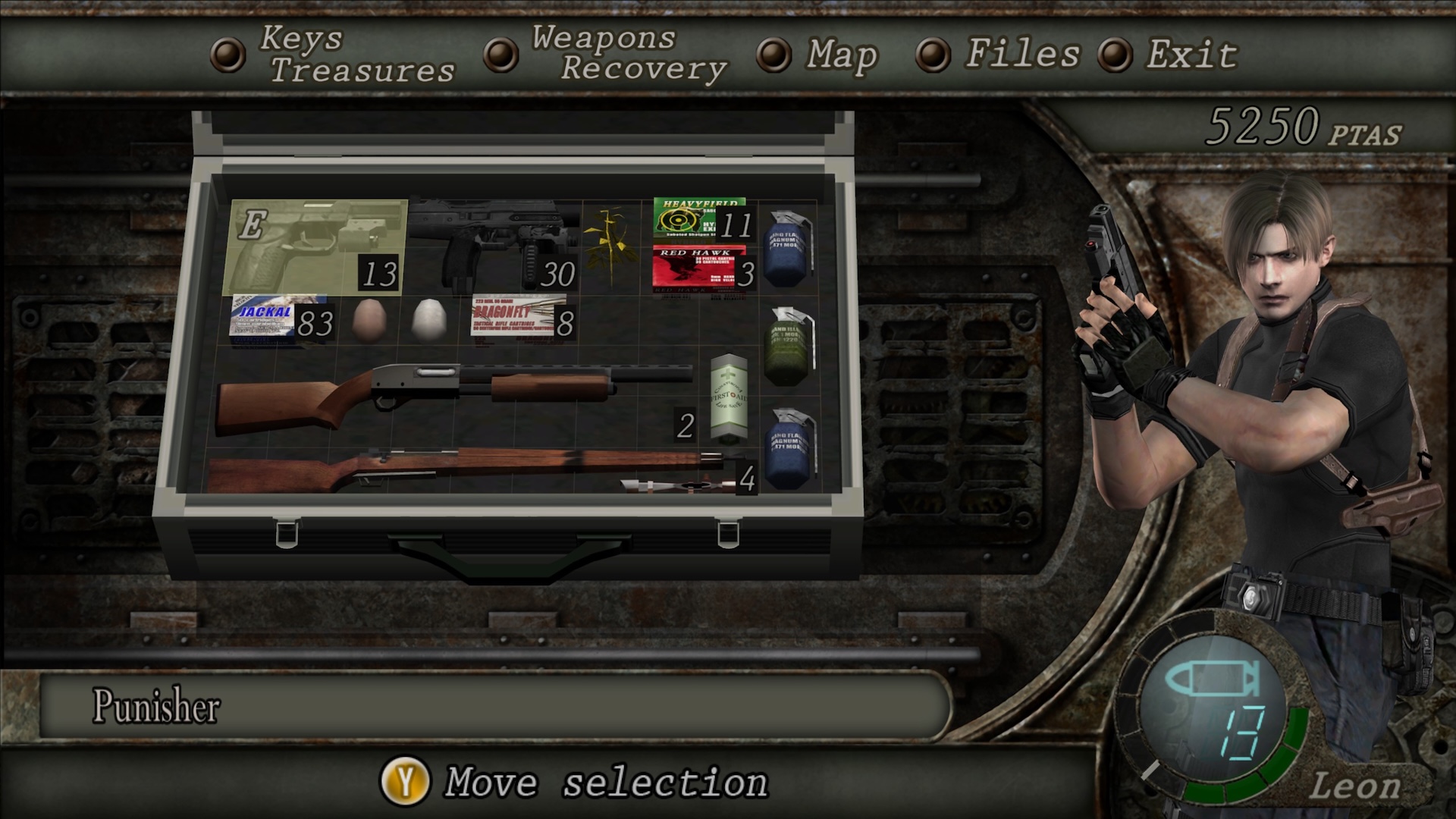
Departing from fixed cameras, Leon controls with a tight, claustrophobic over-the-shoulder camera. He can stop moving and aim his gun by holding down a button and swiveling the right stick. This makes combat much more dynamic than predecessors, and makes a smart compromise to maintain the tension between fleeing danger and stopping to aim and shoot at it. The parasite-infested villagers (they’re not technically zombies) can be shot in the leg to slow their advance, in the arms to drop weapons, or in the head to briefly stun them. A couple of those states can be followed up with melee finisher attacks or swipes with Leon’s knife. Leon feels a lot more capable and deft with violence than a typical survival horror protagonist, but the availability of these melee moves makes them a crucial tactic for conserving resources while dispatching hordes of enemies. And, of course, the famous inventory grid constraint ties it all together nicely by forcing a balance between ammo, grenades, healing items, and the weapons themselves.
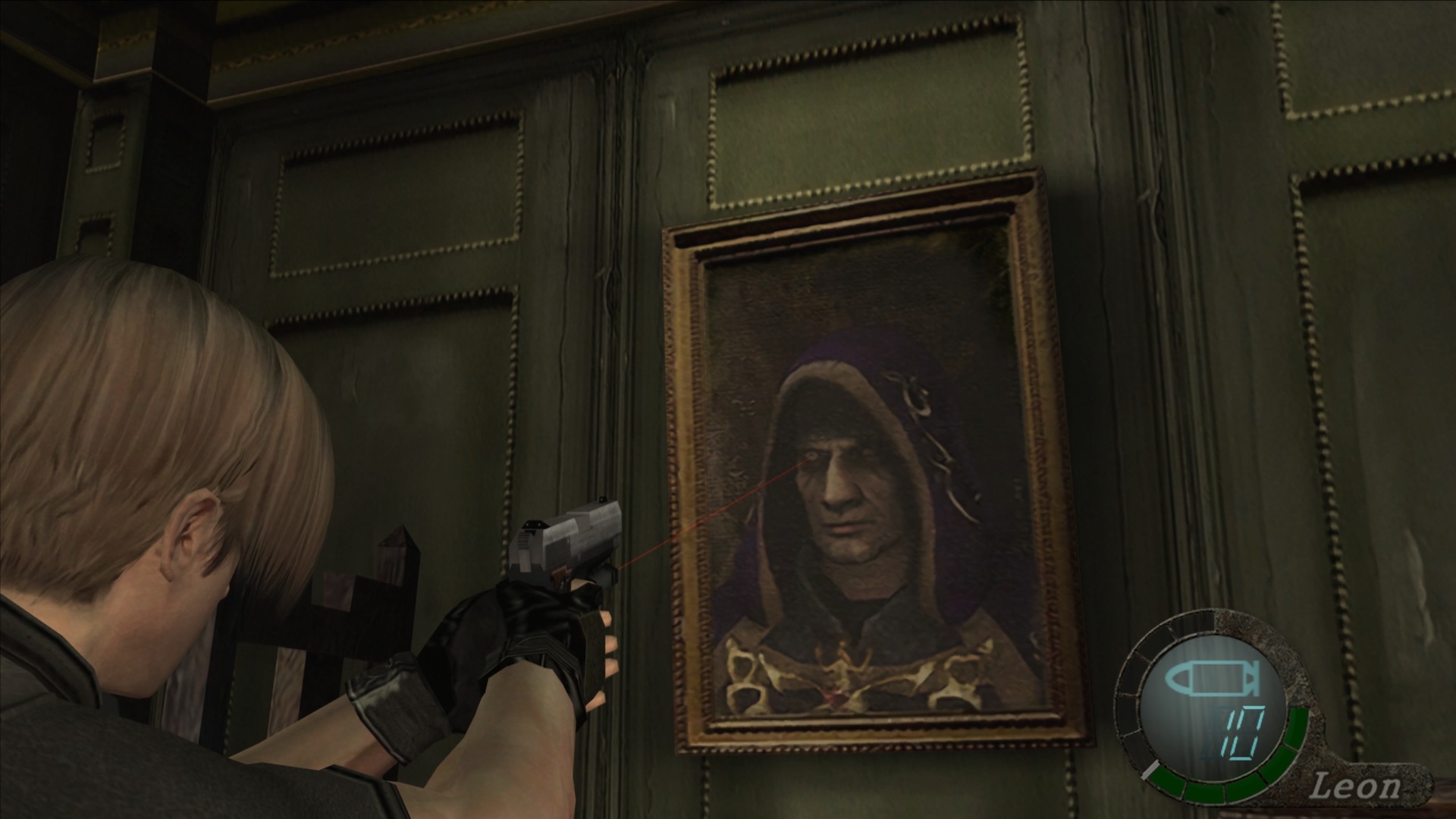
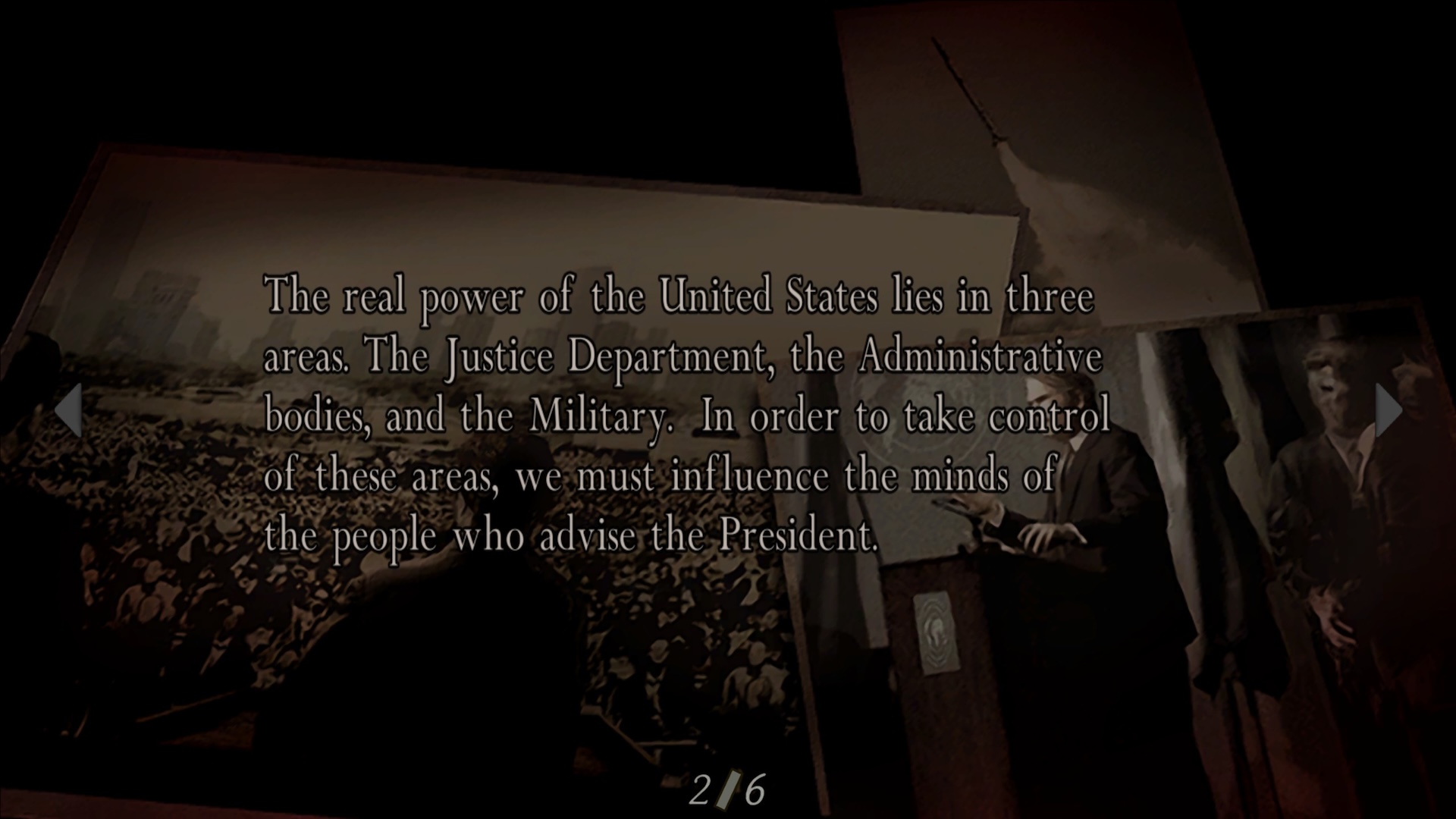
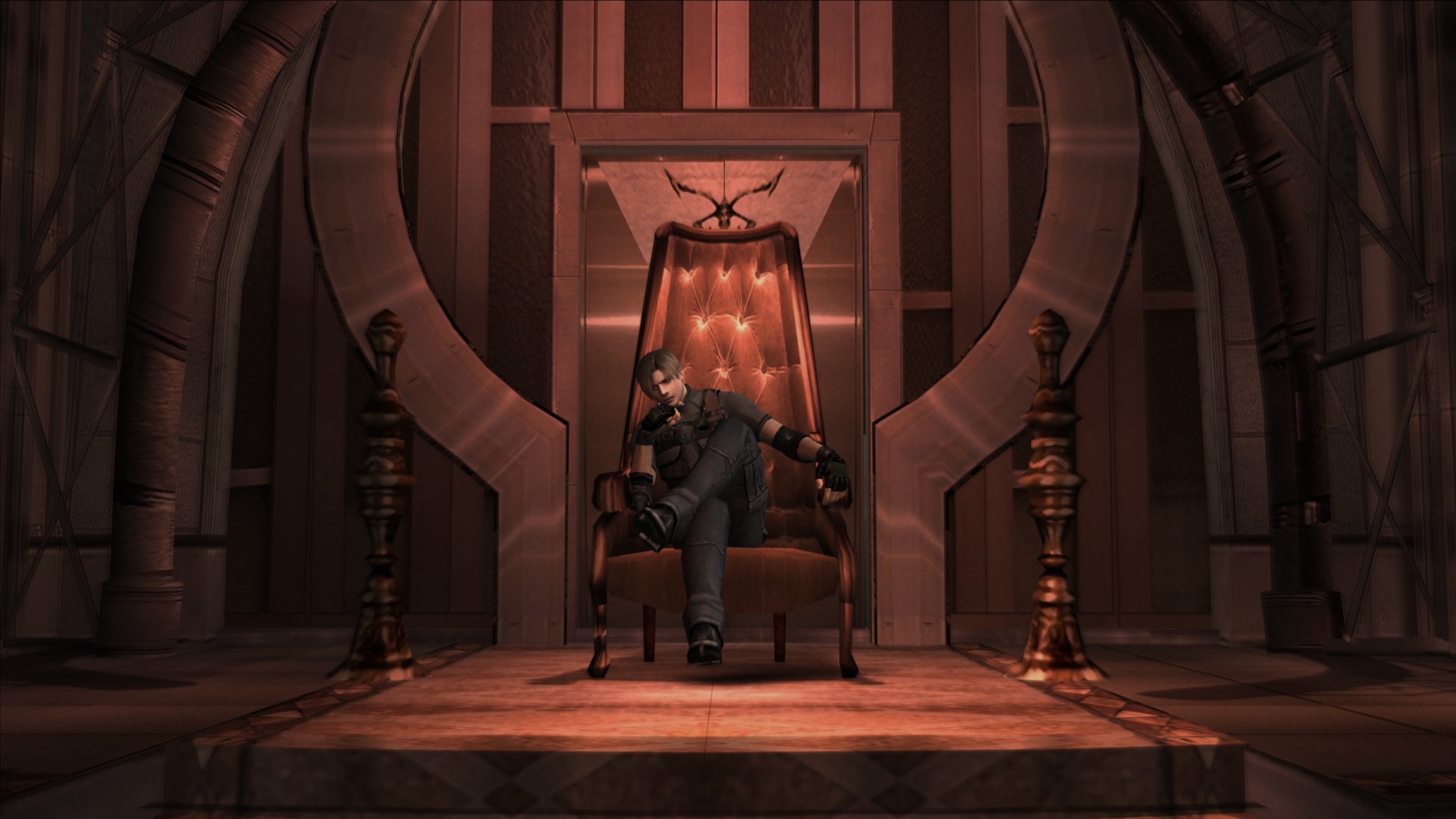
The writing and voice acting are also crucial parts of synthesizing Resident Evil 4’s corny action-horror tone. The writing wears thin in places, especially the random acts of casual misogyny from both Leon and Luis and the frequent kidnapping and endangerment of Ashley. In fact, the game seems so anxious about including too much “escort mission” play (which isn’t even that bad) that Ashley repeatedly gets captured and rescued throughout the game. But in many other places, the camp really shines: Leon’s stupid tough-guy affect and one liners, Ada Wong’s comically exaggerated femme fatale shtick, the various villains’ gloating and bravado. The story unravels into a scheming cult leader’s plot for world domination, which is enabled by awakening a monstrous prehistoric parasite and driven by an absurd plan to kidnap and mind-control the daughter of the president of the USA and then, presumably, use her to infiltrate the entire government apparatus. It’s so fucking stupid (complimentary).
The campy writing is bolstered by sequences that are deliberately alternating between action-movie bombast and survival horror tension. Resident Evil 4 is full of set pieces that it doesn’t feel the need to entirely justify: a stumbling chase through a maze of shipping containers dangling inexplicably above an abyss, a sprint through a compound while a friendly helicopter blows stuff up along your path, even a reference to the gruesome laser grid scene in the first Resident Evil movie; the list goes on. At one point, you’ll encounter the Regenerators, terrifying infected corpses that refuse to die. Some hours earlier, you might have realized that Leon can suplex standard enemies after stunning them. The game has both things and does an admirable job of cohering them.
I think part of my fondness for the campy tone comes from an unexpected familiarity with it. This is the only Resident Evil game I’ve touched, but its development studio is the same division at Capcom that made the Devil May Cry games of the same console generation. Despite very different approaches to combat and controls, there are level design sensibilities, bits of incomprehensible gothic and industrial scenery, and painfully corny voice lines I recognize as stylistic touches from that team, enough to make me feel oddly at home.
Reflections
Now that my Backtracking project is firmly in the height of the PS2 era, I’m finally playing titles that were contemporary with ones that I played as a teenager. In 2005 I wasn’t just playing hand-me-downs from my dad and my choices weren’t as heavily corralled by console access as they were in the previous generation. I was mostly making my own choices about which games to rent and buy for my PS2. At this point I was finally beginning to explore JRPGs. My action game diet was expanding beyond cartoony platformers like Ratchet and Clank to include edgier, more “grown up” (huge quotes there) games like Capcom’s own Devil May Cry. It was a time where I was not just exploring games haphazardly, but actively honing and broadening my taste.
Maybe that’s why I have such a nostalgic fondness for the unabashed quirks of games from the mid-aughts. The goofy action set pieces of Resident Evil 4 have far less polish and visual fidelity than the ones you find in later generations, but they operate with a level of sheer audacity that more than compensates. Even the little details charm me: the magically omni-present merchant has about a dozen voice lines, and you can bet your ass he’s going to use one of them every single time you press a button in the shop menu.
There’s a sense of unbothered corniness to the over-the-top spectacles in Capcom’s big-budget PS2 titles that feels like it’s become more subdued in comparatively-bigger-budget modern equivalents, which put more stock in moments of somber storytelling and high visual fidelity. I don’t think this is unique to Resident Evil (and I would need to play further to find out if newer titles retain the camp), but I have a strong impression of an impending loss of playfulness going into the PS3/Xbox 360 era. I’ll have to see what I find as the project continues.