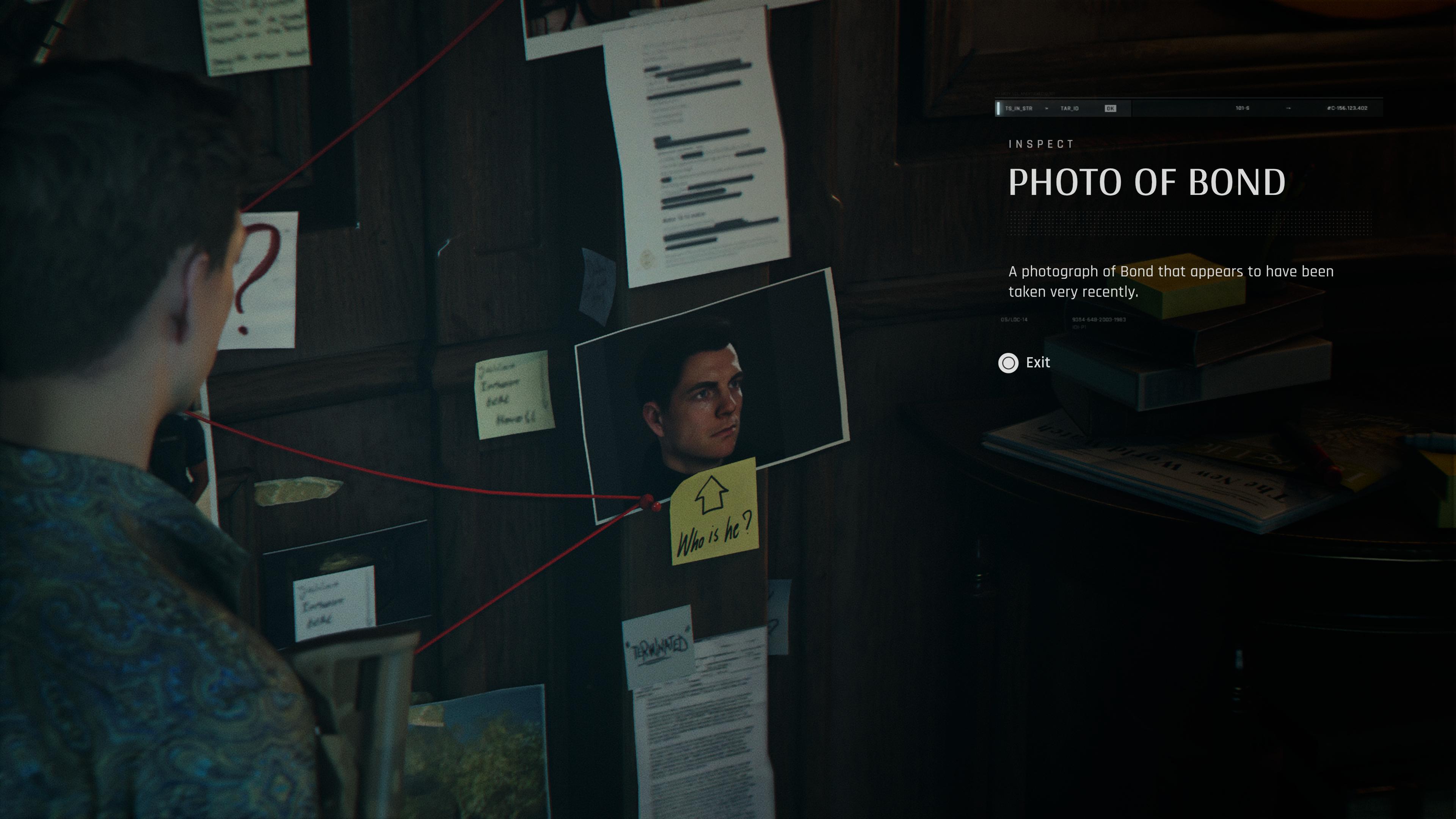
Last week, IO Interactive released 007 First Light, their first game in 16 years to feature a protagonist other than the spectacularly bald 6’2” human chameleon known as Agent 47—the face of the Hitman series. In 007 First Light, we unsurprisingly play as James Bond, rebooted now into the present day as a headstrong and cocksure young recruit. He’s suave and charismatic as a rule; his personality is designed to dominate and carry the story rather than conspicuously vanish within it.
I’m probably not even halfway through 007 First Light (and admittedly I haven’t quite finished the modern Hitman trilogy either, nor played its predecessors), so my impressions are based on the first 7 or so hours. The story has been placing breadcrumbs related to technology, artificial intelligence, and the role of government espionage, so I’m sure there will be more to unpack. But what’s most evident from its early sections is the way it highlights a particular politics of lethal violence, and how that contrasts with the Hitman series. In making the shift to James Bond, IO reveals the fascinatingly stark cinematic and thematic distinctions between “spy” and “assassin,” and they’re not exactly the ones you might think.
Both games play as a blend of stealth and action, with stages that are crowded and labyrinthine, just chaotic enough to cover for their protagonists’ improvised shenanigans. Bond gets into plenty of fist-fights that end in cartoonish knockouts, but is also occasionally thrust into violent shootouts that end in dozens of corpses. Meanwhile, Agent 47 is murderous as a rule, but only towards his targets: while he may be able to kill just about anyone, he will be judged harshly for non-target fatalities via the score tally on the mission results screen. In Hitman, the best outcomes can only be achieved by efficiently eliminating the primary targets while also minimizing attention and collateral damage. But Bond is an action hero! In his story, collateral damage is inevitable and part of the excitement, and it’s always justifiable as long as it gets him out of a pinch.

Bond himself has recognizable moral convictions: he believes in working to serve the greater good and has a deep sense of interpersonal loyalty. His actions, including the bouts of gun violence, are steps on a path to subdue terroristic and violent elements that might threaten the British government and (presumably) its citizens. To that end, it’s entirely acceptable for him to murder a few dozen unaffiliated PMC goons along the way. But Agent 47 isn’t given such permission to kill his way out of a situation, even if he’s capable of it. At the beginning of the Hitman trilogy (launched in 2016 and now collectively rebranded as the “World of Assassination”) he joins a shadowy global criminal organization that means to use him as a tool to eliminate troublesome elements in the world of international crime. This organization is more overtly extrajudicial and is not directly aligned to any national agenda; at the end of the day, though, the people that it points Agent 47 at are powerful criminals, most of whom are strongly characterized as unabashedly awful people.
Bond is not only an agent of the state, he’s also an iteration of a character with a long history. So it’s fitting on both counts that, despite his loose cannon attitude, there are rules that govern his actions. 007 First Light is candidly restrictive about what Bond can do and when: its systems limit when players can and can’t take certain actions in a way that’s distinct from Hitman. For example, when walking around in public, Bond can’t crouch down and sneak about; that would be super weird! People would notice! (And they certainly do notice when Agent 47 behaves strangely like this.) Likewise, the interactive prompts around Bond (pickpocket someone, tamper with some device) will be grayed out if there are witnesses who can see him. By and large, this is meant to streamline the game and make it more approachable. It’s a helping hand preventing players from blowing their cover with mistakes that Bond himself would never make.
But perhaps most interestingly, the game also heavily restricts the use of guns: Bond can only draw his weapon when the situation demands it—the input is disabled otherwise. When Bond is threatened with lethal violence (guns, not comical fisticuffs), a “Licence to Kill” banner appears at the top of the screen and firearms become usable. You’re free to rack up as many headshots as you see fit. Most of the stealth and exploration sequences do not grant this, so the spectacular gun violence is carefully corralled into moments of desperation and narrative turning points.

Much of the exhausting, recurrent moral panic around violence in video games, which has flared up in various forms throughout my life, centers around what games allow players to do. Grand Theft Auto is practically the poster-child for these criticisms because it opens the door to both player freedom and deliberately transgressive content. Hitman is similarly permissive in its gameplay and even grimmer in its focal conceit: while most players will work their way through levels as stealthily as possible, or go for record times with perfectly-timed sniper shots, there will always be outliers who test the edges of the game with cartoonish mass murder. 007 First Light is obviously inheriting a specific politics of violence from action movies and spy thrillers in which a certain category of faceless goon can be safely mowed down without remorse while all other life is fundamentally respected by the protagonist. Meanwhile, Agent 47 is always capable of killing, but he only ever has a “licence to kill” his contract targets (who, as luck would have it, are practically Bond villains themselves). When games make a wide array of actions freely available, players are able to use them in deliberately transgressive or shocking ways. 007 First Light seems to recognize this burden and sidestep it by always giving Bond an explicit justification for lethal violence and mechanically curtailing it when it would mischaracterize him.
In December of 2024, Luigi Mangione allegedly shot and killed United Healthcare CEO Brian Thompson. Despite the shocking details of the killing, the cultural response to the event became a phenomenon unto itself. Numerous public figures spoke up, ticking all the standard rhetorical boxes: shock and dismay, condolences to the family, and a firm insistence from conservatives and progressives alike that there is “no justification for violence.” However, many politicians on the left also cautiously acknowledged that the public reaction to the killing was...less somber, and that people's material conditions might be a factor.
Online, there was a noticeable wave of sympathy and admiration—not for the victim, but for the accused. Mangione became something of a celebrity assassin, his story and motive mythologized before details had fully emerged, incorporating every known factoid about his life. A certain subset of people openly lusted after him. Fan fiction was written.
Mangione became a symbol of retributive violence against the abuses of the private insurance system, the same one that made Thompson staggeringly wealthy and powerful. In the wake of his killing, Thompson became something of an inverted martyr: an unwilling sacrifice that exposed the cruelty of his social and professional position, a man whose wealth was accumulated through denied insurance claims. He fit the mold of a cartoonish evil billionaire, regardless of how many of United Healthcare’s many abuses are directly and specifically attributable to him (to be clear, I suspect that plenty are). To an increasingly disenfranchised general public, he was a person who clearly deserved what he got; there was, for many, ample justification for violence.
Interestingly, the “video games made him do it” narrative did pop up, but it was dredged up through quotes from a classmate who mentioned playing Among Us with Mangione*.* Among Us was so astronomically popular at the time that this insinuation was broadly seen as laughable and conspiratorial, entirely secondary to what Thompson represented and why he might be targeted.
In nearly every mission in the Hitman games, the primary targets—the only people who must be killed in order to progress—are comically evil people. Despite any sympathetic history they may have, Agent 47’s targets generally seem to deserve what’s coming to them; crucially, they are also the only exceptions from the scoring system’s judgmental treatment of lethal violence. Meanwhile, Bond stumbles into inescapable shootout sequences regardless of player intentions and with only a single brief nod (so far) to his own personal remorse towards killing. Where Agent 47’s morality is bound up in the collateral damage he incurs on his path towards assassination, Bond is a morally untethered avatar of action movie spectacle, hemmed in only by the permissive structure of MI6 that manifests as mechanical limitations. Bond’s “licence to kill” gives him the kind of legal (and pseudo-moral) “justification for violence” that’s only available to agents of the state. And because its endemic to his role as a government spy and action hero, Bond’s violent shootouts have the same narrative weight as his daring car chases—and both types of action set piece are emotionally secondary to his somber moments of mourning a fellow agent.

Agent 47, on the other hand, is not exactly a morally relatable character, and he often comes across as more of a comedic avatar of the player's own creativity. The pathos of his story comes from his own unenviable amorphousness, and his unspoken desire to build some sort of identity out of nothing but trauma, grueling training, and a void of interpersonal history. He is a man with a number, not a name; the emotional hook of his story is a struggle to become more than the carefully-molded tool of the organizations he serves (and is ultimately betrayed by).
So here in 2026, in the wake of celebrity assassin Luigi Mangione and under an American government that is disappearing people it doesn’t like, I find that Agent 47 is a noticeably more sympathetic figure than Bond. He lacks the culturally-amplified magnetism of Luigi, but his story is not so different from the ones that were initially told about Luigi: he’s just a victim of circumstance and systemic abuse who used the knowledge and capabilities available to him to push back against the people who pull the strings. His power is directed at the cruelest of the ultra-wealthy and it comes from his own personal will and history, not from state-sanctioned impunity. I know that the spy thriller genre is not new to this kind of baggage, and on some level, this recognizable difference is acknowledged in First Light: Bond has good intentions, but still finds himself constantly in the grip of mortal violence, pulled beneath the surface of a cold and calculating espionage organization that strives for control above all else. But despite the melodramatic conflict between agent and organization, it forms a strange contrast. Agent 47 is a political assassin hired by private interests, but he’s eerily easy to sympathize with (despite his outward coldness) as long as his targets sufficiently demonstrate their depravity. Based on the crimes these targets admit to, we can see that Agent 47 lives in a world of profound inequity, a world where powerful people abuse and exploit the vulnerable (sound familiar?); but James Bond lives in a world of well-meaning western nations, enigmatic villains, and relative moral certainty for Bond himself—especially when he’s conveninetly bucking the authority of his employers.
Despite their differences, the Hitman trilogy still occupies the distinct genre space of a globetrotting spy thriller. Agent 47’s missions are scattered across the globe in dramatic settings that emphasize the cultural breadth of the world. Though the pursuit of his targets most often takes him to places of opulence and excess, they also bring him to the crowded streets of Mumbai or the bright-eyed suburbs of Vermont. The world he explores is still heightened but it’s ultimately a little bit closer to our own than the one that Bond occupies. And despite the frequent silliness of the Hitman games (which 007 First Light tamps down by limiting player behavior), they also feel darkly joyful, fueled by the same delight that makes blowing away Nazis in Wolfenstein so satisfying. The same frustrated sense of justice that makes people celebrate Luigi Mangione.

None of this is to say that First Light is in some way morally inept, or that Hitman is somehow morally correct. First Light’s primary goal is to adapt another media franchise, including its themes and tone. In practice, it inhabits a happy medium between the whacky sandboxes of Hitman and the bombastic adventuring of the Uncharted series (famously a target of the ludonarrative dissonance critique that I’m getting dangerously close to with my arguments here). There’s nothing inherently wrong with the genreful casual violence of snarky, big-hearted action hero protagonists, but I must admit that I have very little nostalgia for James Bond as a franchise and I find myself less likely to gravitate towards the video games that import its brand of action heroism than I was a decade ago. For me, First Light’s design tendencies are recognizably in conversation with Hitman’s, so much so that it makes the comparison sharper and leaves it feeling off-putting; each gunfight sequence is a little bit more discordant, too cleanly delineated as a set piece rather than a natural narrative moment. Despite how smoothly the gameplay flows between espionage, banter, car chases, and shootouts, the tonal shifts feel like hard cuts in a way that Hitman rarely does. It’s putting mechanical guardrails around its narrative so conspicuously that they become the most noticeable thing about it.
On a certain level, playing so much Hitman has spoiled me for its unique tonal specificity, which is difficult to emulate outside of its “World of Assassination” (a phrase that pretty nicely sums up both the absurdity and the purposefulness of murder within it). Not unlike the Luigi stans, I may have developed an unintended sympathy for Agent 47 and his whacky billionaire-murdering antics. I’m certainly still enjoying First Light a fair bit, and I can see how it's positioned to please a lot of folks who don’t enjoy Hitman’s rhythms. But I’ve also gained a keener fondness for the delicate line that Hitman manages to walk, and I’m more curious than ever to see what IO might do next.