We’ve made it to the end of 2025, so it’s time to look back on this year’s video games. I’m always tempted to open these posts with platitudes: about the state of games as a professional creative field, the endemic layoffs, the looming existential threat of generative AI. But there’s better analysis out there already. What’s important to me right now is supporting art that I love and—most importantly of all—the people who make it.
In my mind, a good “Best Games of the Year” list accomplishes two things. First, it’s a thoughtful collection of strong personal impressions and critiques. Second, it’s a fun and rewarding skim for regular people who justifiably ain’t readin’ all that. So to that end, I’m keeping last year’s format I and putting it all in one big end-of-year video games post. Read on ahead, or just skip to the bottom to see if I made the right choices (don’t worry, I won’t tell).
Honorable Mentions
There are a few games that didn’t make the list but needed a bit of special attention for one reason or another, so here are some honorable mentions.
Clair Obscur: Expedition 33
I almost forced myself to fit this into the main list just because it was such a huge talking point in games this year, particularly “indie” games. And despite my complaints about its ending, I really liked a lot of what it’s doing. The multifaceted combat system rewards both sharp reflexes and build-crafting cleverness, and the novelty of this two-pronged approach is really felt even if it wears thin here and there. The writing and performances have both gravitas and whimsy. Artistically and musically it’s… well, at times a tad overrated, but very strong nonetheless. Ultimately, though, everything on my main list commanded a bit more enthusiasm from me. Is Clair Obscur good? Hell yeah it is, but you probably didn’t need me to tell you that.
Isopod
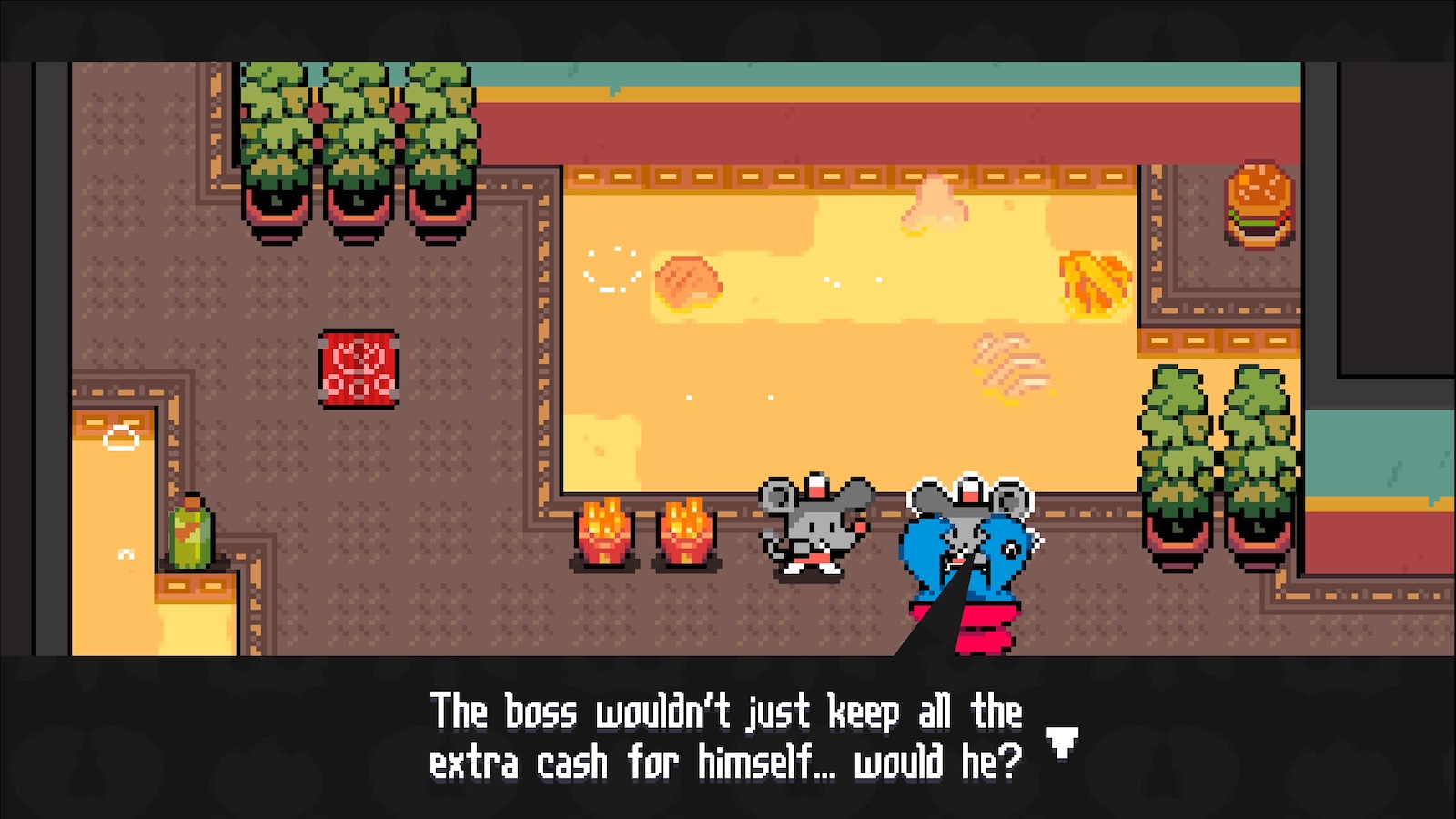
I was really sad that Isopod missed my list. It’s a delightful little game with fun ideas and consistently endearing writing. Under it’s “cute bugs” veneer is a story about labor organizing, revolution, and anti-capitalism that never wavers in its ideological clarity despite its comedic maximalism. It’s frequently corny and goofy, but I think sometimes we should be allowed to have silly popcorn stories that are also radically leftist.
Lies of P: Overture DLC
The fact that his is a DLC is not enough for me to disqualify it outright, but I don’t have a lot to say about this excellent expansion. It’s basically everything I hoped for from a Lies of P DLC and the things that I love about it are…pretty similar to what I loved about the original game, which I gushed about at the end of 2023. The only thing I might add to my past praise is that Lies of P continues to be a game for parrying sickos (an affliction I suffer from). Nailing an elaborate parry sequence and following up with a devastating punish is just sublime; it makes learning and mastering fights feel truly gratifying. I played this DLC obsessively and if you liked the base game, you will too.
Indiana Jones and the Great Circle
I liked this game just fine and I thought it would make my list. But this is actually a dishonorable mention: I unfortunately forgot when I first wrote about Indiana Jones that developer MachineGames is owned by Microsoft, a company that is willingly and actively participating in the genocide of Palestinians in Gaza. Microsoft’s video game products are priority targets for the BDS movement and are further reiterated by activists within the industry via No Games For Genocide.
I’ve added a note to my prior post about this game and I won’t say anything more about it here, but I will share why I bring this up. I strongly considered quietly excluding Indiana Jones from my list, but then I thought about the audience for this blog (which is very small) and the audience for my GOTY posts in particular (which is a tiny bit larger) and I realized that I wanted to put these thoughts in front of those readers. Some folks who see this post aren’t interested in boycotting games because of a publisher’s support of war crimes. We all have to decide where our own lines get drawn. But if you’re someone who bristles at the suggestion to boycott, someone who groans that I would spend three paragraphs preaching about it, I hope that you stop and think about why you feel that way. I hope you consider what you believe in and what you’re really okay with. If you’re skeptical about the effectiveness boycotts or particular boycott targets, I hope you consider whether you truly know better than the activists who are calling for them and whether your process critiques override your solidarity with their cause.
I hesitate to categorize myself as a “journalist” under No Games For Genocide’s boycott guidelines, but I also believe that my posts have a different scope than personal consumption habits. I want to acknowledge my oversight in writing about Indiana Jones earlier this month (I’m embarrassed that the Bethesda logo didn’t jog my memory) and make clear my intention to avoid buying and talking about Microsoft’s games in the future until we see them meaningfully change their practices. Frankly, I don’t think it’s that much to ask.
But I’ll belabor it no further. Now it’s time for me to tell you about the games I think you should support!
#10 — Ambrosia Sky: Act 1
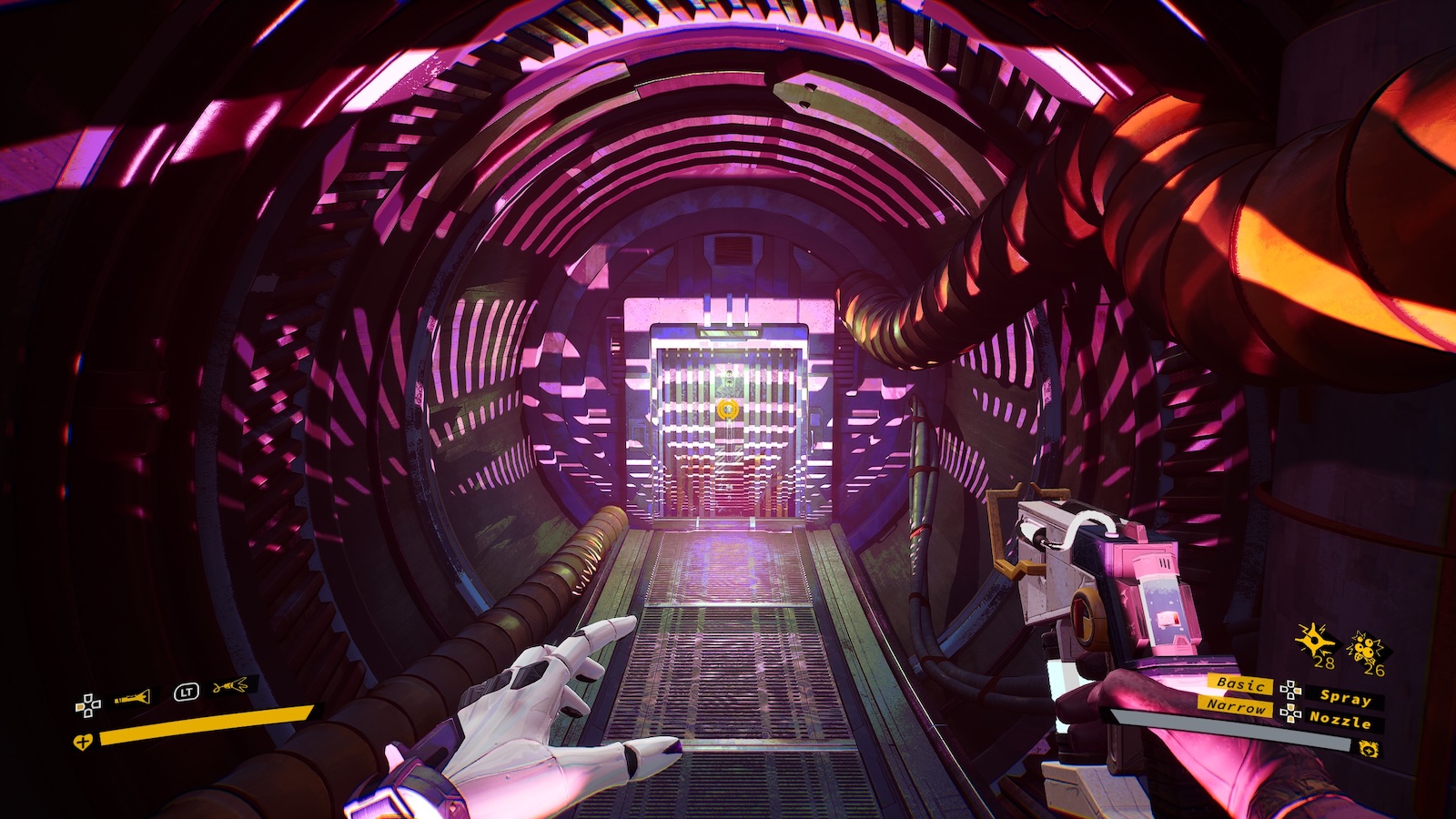
Ambrosia Sky: Act 1 is a mashup of something like PowerWash Simulator with a layer of science fiction immersive sim. Its story unfolds across a number of individual cleanup missions across a large, remote fungus farming operation in the rings of Saturn. Protagonist Dalia, having left the colony in her youth to join up with a research-motivated disaster-cleanup organization called the Scarabs, now returns to her home and confronts the horrors of what happened here, along with her unresolved feelings about the place and the people who lived there. These details unravel slowly, contemplatively, while she methodically blasts away dangerous fungal overgrowth and kicks her way through quiet hallways in zero-g.
Ambrosia Sky feels somewhat incomplete, and to be fair, that appears to because it is. The development team promises future acts that will continue the story some time next year. I don’t know the whole story of why it’s broken up into acts, but there’s definitely a feeling of incompleteness: the skill tree’s upgrades can feel a little inconsequential and they fill up a little too easily, and though the game presents some challenge at the beginning, future levels fail to introduce enough new ideas to the fundamental fungus-removal part of the game. If I’m being honest, I wanted something that escalated its mechanical ideas a more substantially over the course of my 7-ish hour playthrough.
But at the end of the day, that doesn’t matter that much. Because the things that make Ambrosia Sky compelling are not the immersive sim interaction layers or chemical sprayer upgrades. What makes it interesting is its melancholic storytelling, sometimes through various data logs and Dalia’s mumbled realizations as she faces the wreckage of her past, and sometimes more indirectly through the contours of that wreckage, the places it must have once been. Even the exact plot beats aren’t as important as Ambrosia Sky's impeccable atmosphere. It’s in the way the game’s textures and shading dapple every surface with sandpaper rough, the way its color palette hangs in an odd space between muted and colorful, the soundtrack full of hushed whispers and strange beeps and big synth bass rumbles. And tying it all together is level design that’s deeply engaging to explore and clean your way through, intricate and confounding while also feeling intentional and lived-in and disconcertingly abandoned. And though the narrative is mostly delivered through asynchronous communications, there are a few sequences that use lovely comic panel overlays to drive home their emotional weight.
Ambrosia Sky is an eclectic mix of things, and some of them feel half-baked (albeit with room to grow in further installments). But it’s atmosphere is genuinely unparalleled and I’m really excited to see where it goes next.

#9 — Despelote
Many of the most lauded big budget video game narratives in the mainstream are, in all honestly, about as good as a mediocre book. Games have a lot of things going for them that enable them to be unique experiences, but they make for a pretty clumsy way to tell cinematic stories. The beloved blockbuster video game stories that succeed tend to do so in spite of the format rather than being indebted to it.
But in the indie space, it's easier to find something different. Despelote takes place in Quito, Ecuador during the early aughts leading up to Ecuador’s debut appearance in the World Cup. The story is told through the eyes of young Julián, a grade schooler who causes innocent trouble for his family as he kicks a soccer ball around town and watches the city around him fixate ever more intently on the World Cup and the Ecuador national team’s performance. Despelote is broken up across short vignettes and sandbox spaces in which Julián is sent off to go play (or asked to stay put) and return some time later. Throughout, it plays with your attention and time management, goading Julián towards mischief and ensuring that his promises to return on time will slip away in the simple excitement and distraction of childhood play.
Despelote’s physical spaces and passage of time are where it leans most into the unique strengths of video games. A simple series of short stories or scenes would not convey the aimlessness of wandering around the city, the losing track of time, the attempts to tune out cross-talk from your parents while you play your football video game. These approaches to capturing an adolescent perspective are full of warmth and nostalgia, but never so narrowly-focused that they prevent the player from empathizing with the characters around Julián (even if he himself seems more interested in playing games).
By the time it concludes, Despelote has unfolded into a more contemplative meta-reflection on its own making and the ways the it depicts a cultural moment as its designer remembers it, or might have remembered it had he been that age at that time. It’s sweet, imaginative, and relatable while also being deeply grounded in a precise sense place and time. It has all the personality of memoir but with the tactility of video game football physics. It’s short and charming, always engaging, and really special overall.
#8 — Consume Me
Consume Me honestly has a lot in common with Despelote in terms of structure, but a very different perspective and very different design intentions. It tells the story of Jenny, a direct self-insert of the game’s creator, as she finishes high school and pursues college and relationships. Throughout these years, Jenny finds herself challenged by the sheer magnitude of expectations placed upon her, compounding with personal struggles around body image and dieting.
It’s a fairly blunt depiction of these issues, and there are moments where it almost feels careless. It’s a game that would rather deliver its criticisms through mechanics and wry humor while clad in adorable picture-book aesthetics and jaunty chiptune tracks. Somehow, in the space between the delightful style and heavy themes, there’s an emerging clarity to what’s happening that comes through in the escalating mechanical ideas.
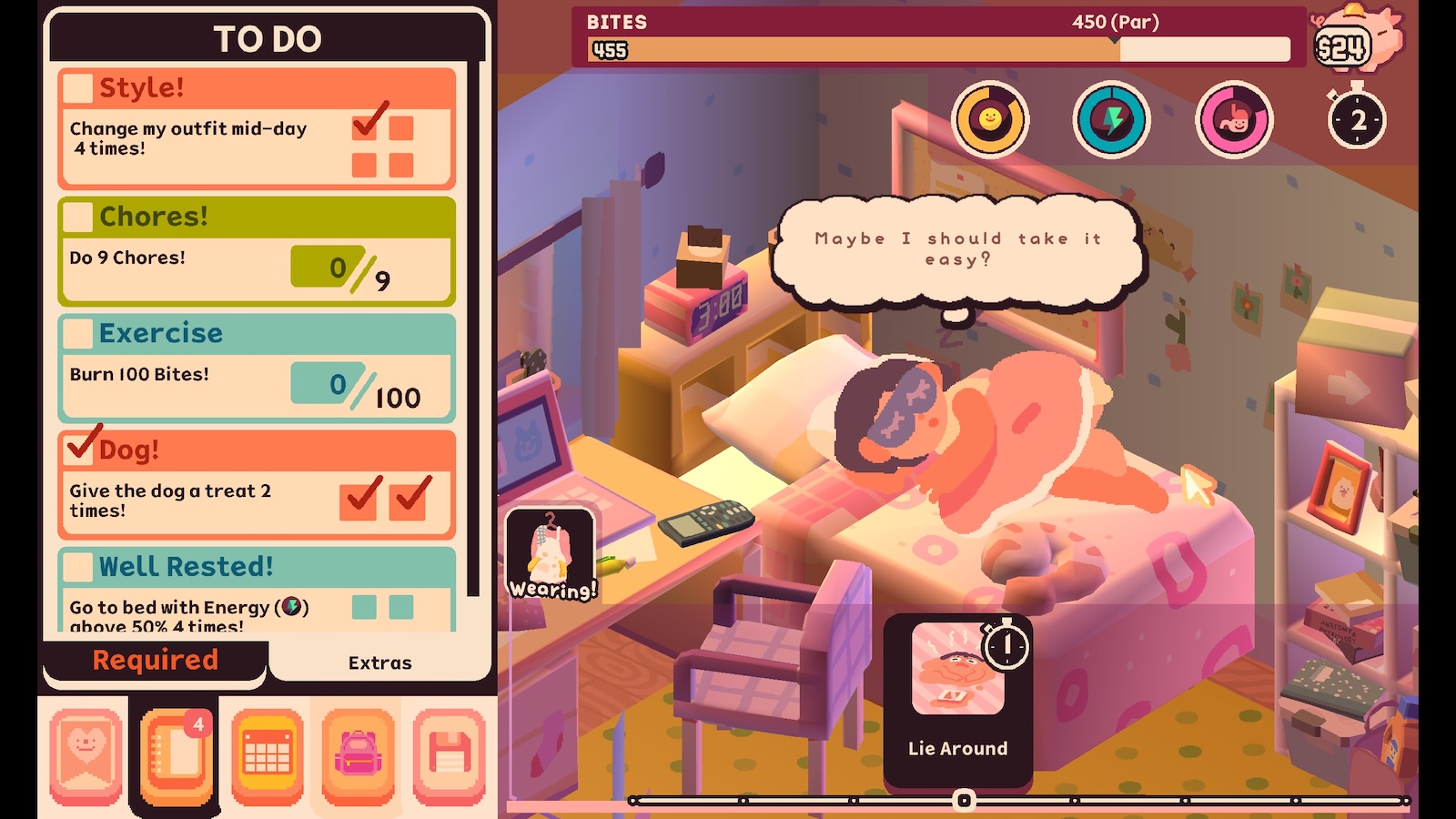
The game plays out across a number of chapters, each of which places a daunting pile of objectives on Jenny’s shoulders and demands that the player using every tool at their disposal to accomplish them before the appointed date. Warioware-style minigames are the vehicle for Jenny’s various tasks, with your performance substantially affecting how much progress she makes. Do some chores to earn bus fair to visit your boyfriend, read a book about dieting to make your meals more efficient (but also kill your mood), put on free makeup samples for a self-esteem pick-me-up, drink coffee, stay up too late. It’s time management and bad habits all the way down. Consume Me is cute and playful on the outside and harshly demanding under the hood, culminating in looming fail states at the end of each chapter that send you back in time to try again should you slip on any of your goals.
Consume Me’s minigames are its heart, and while they’re not all brilliant, the cleverest ones function as perfect, frantic metaphors for what it feels like to blitz through exhausting tasks while more chores, homework, and self-loathing piles up in your wake. The minigame for reading a book is the best interactive metaphor I’ve ever seen for trying to read while distracted. The game’s general veneer of colorful positivity is both genuinely delightful and also clearly saying something about the masks we put on and the compounding costs of acting like we’re fine when we’re not.
By the end, Consume Me evolves into something a little different, its epilogue taking on a meta-narrative angle and revisiting its core ideas with dramatically different inflections. In some ways, the ending could feel underwhelming, but its honesty and personality kept it in my good graces. Consume Me is both incredibly stressful and deeply engrossing. It’s mechanical structure alone makes it hard to put it down and that makes its narrative even more affecting.
#7 — Pipistrello and the Cursed Yoyo
It’s practically a given that something in the metroidvania lineage will make its way onto my list each year. The odds that I’ll play several and enjoy at least one of them (more on that later) are quite good. That said, I’ve become familiar enough with the genre and its popularity that I often seek some sort of novelty in the games I play within it.
Looking at the timing from Dandara (2018) to Unsighted (2021), we’re actually one year overdue for another entry into the pantheon of “unique twists on Zelda and/or Metroid formulas from a Brazilian developer”. But the wait ended this year with Pipistrello and the Cursed Yoyo from São Paulo studio Pocket Trap.
Pipistrello follows Pippit, the young scion of a ruthless power company, as he embarks on a quest to rescue his horrible aunt who became imprisoned inside his yoyo after a gang of rival capitalists sapped her life force to charge up ultra-powerful batteries that will provide them with infinite energy for their own enterprises. It’s uhh…pretty silly right out of the gate, but its world is big and vibrant and full of all sorts of oddball characters that and subplots. Using a yoyo as a focal object provides a unique mechanical foundation that gets expanded and elaborated through upgrades, most of which come in the form of yoyo tricks that Pippit learns to unlock new kinds of traversal.
Moving around in the game is initially rather basic, but in addition to the library of yo-yo tricks Pippit also gets a brilliantly-tuned jump ability, which gives him a lot of maneuverability and doubles as a dodge during fights. You’ll find yourself jumping and reorienting in midair before using yoyo tricks to propel yourself across gaps and through elaborate puzzle rooms. The flexibility of the jump helps the game avoid being overly stiff and instead makes it feel generous. This little bit of extra wiggle room in Pippit’s movement opens up a whole host of challenging movement and puzzles that feel tricky but don’t involve serious frustration. It takes a while to fully appreciate the basic movement, but it’s a great example of how good foundational movement can make this kind of game stronger all the way through.
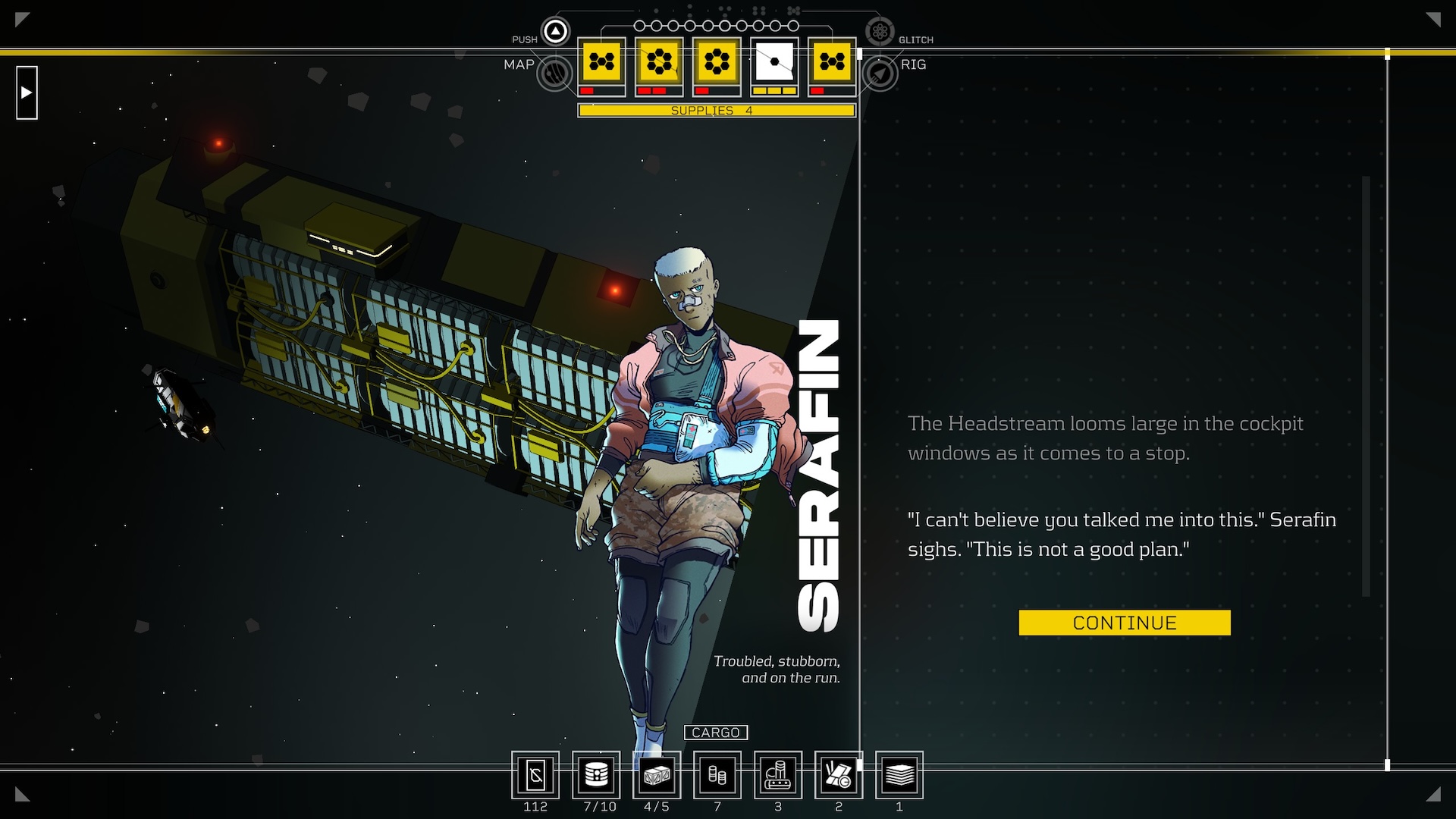
#6 — Citizen Sleeper 2: Starward Vector
Early in the year, we saw the not-so-long-awaited sequel to the excellent Citizen Sleeper (regarded by some critics as the best game of 2022). Starward Vector zooms out to tell a story in a distant sector of space, only barely outside the crossfire of the vast corporate war that rages just off screen in the first game as well. On the shores of the conflict, Starward Vector contends more directly with the flotsam that washes up and the insidious tendrils of influence that sneak in from both of the war’s major players.
But beyond those big picture ideas, Starward Vector is a lot like its predecessor. It focuses on individual people fighting to carve out a life and a future in a world that surrounds them with hostility, precarity, and scarcity. The character writing is what really sings, but Starward Vector also does a better job than its predecessor with sustaining the tension of its dice-driven mechanics, this time introducing various intertwining systems that complicate the core mechanic of rolling dice each cycle and slotting them into various tasks. I had more frequent brushes with disaster and encountered them further into the game than I expected, and this tension generally felt like it mirrored the narrative tension quite well.
The tyranny of random chance in a setting where everything is second-hand and falling apart is a strong metaphor, and the ways in which community helps to offset these difficulties comes through in the mechanics. In some ways I found that Starward Vector was a tiny bit too saccharine, too unwilling to bring its characters to harm or put them at odds. On the other hand, it’s also more nuanced with its exploration of the Sleepers themselves (enslaved workers in synthetic bodies powered by emulated versions of donated human minds). It handles some of its transhumanist ideas with a little more subtlety and intention, conjuring questions around machine sentience without really posing them directly or fixating on them too pointedly. And ultimately, it sets its sights on hoping for more than mere survival and respite; it dares the player to imagine genuinely better futures, even if it’s hard to know how you’ll reach them.
Citizen Sleeper 2 won my heart through sharply written subplots that make the game go, buoyed by a cast of characters who sometimes get along, sometimes butt heads, and always feel distinctive and worth getting to know. By the time it all wraps up, it really is hard to say goodbye.

#5 — And Roger
Some games are best left as minimally spoiled as possible, and that is unfortunately true of And Roger. It’s hard to know what to say about the game itself; it contends with incredibly heavy topics, using confusion and uncertainty as a crucial element of its storytelling. It begins with a girl in a bewildering and scary situation as she tries to understand where her father went and who the strange man in her house is. Even before you know how it shakes out, you can immediately see how much fire this game is playing with emotionally and thematically.
But to talk about this game, the easiest thing I can talk about is my response to it. When credits rolled, I sobbed. It made me think hard about how much I struggle to let myself cry, and the fact that I played it at home alone on a quiet afternoon is probably the reason I felt like I had the space to let it out. It’s a game that had me immediately wanting to call my family and tell them I love them. It uses simple and evocative mechanical metaphors to convey itself, reminiscent of how 2018’s Florence operates in large part through mechanical texture.
The topics that And Roger tangles with are tough ones and I don’t have the authority to say whether it handles them perfectly; my only expertise is my experience as a distant bystander to the themes it tackles, but I would be surprised if there weren’t a lot of folks who have similar experience through proximity. Either way, in my estimation, it brings profound empathy, care, and love to the way that it chooses to address these themes.
To keep talking around it would just be frustrating and unhelpful. I really believe this game works best with minimal foreknowledge. If you’re interested but you’re worried about not knowing where it might go, message me about it and I can tell you if it touches on something you might not be cool with. But otherwise, just play it. It does what it sets out to do with surprising grace and genuine pathos.
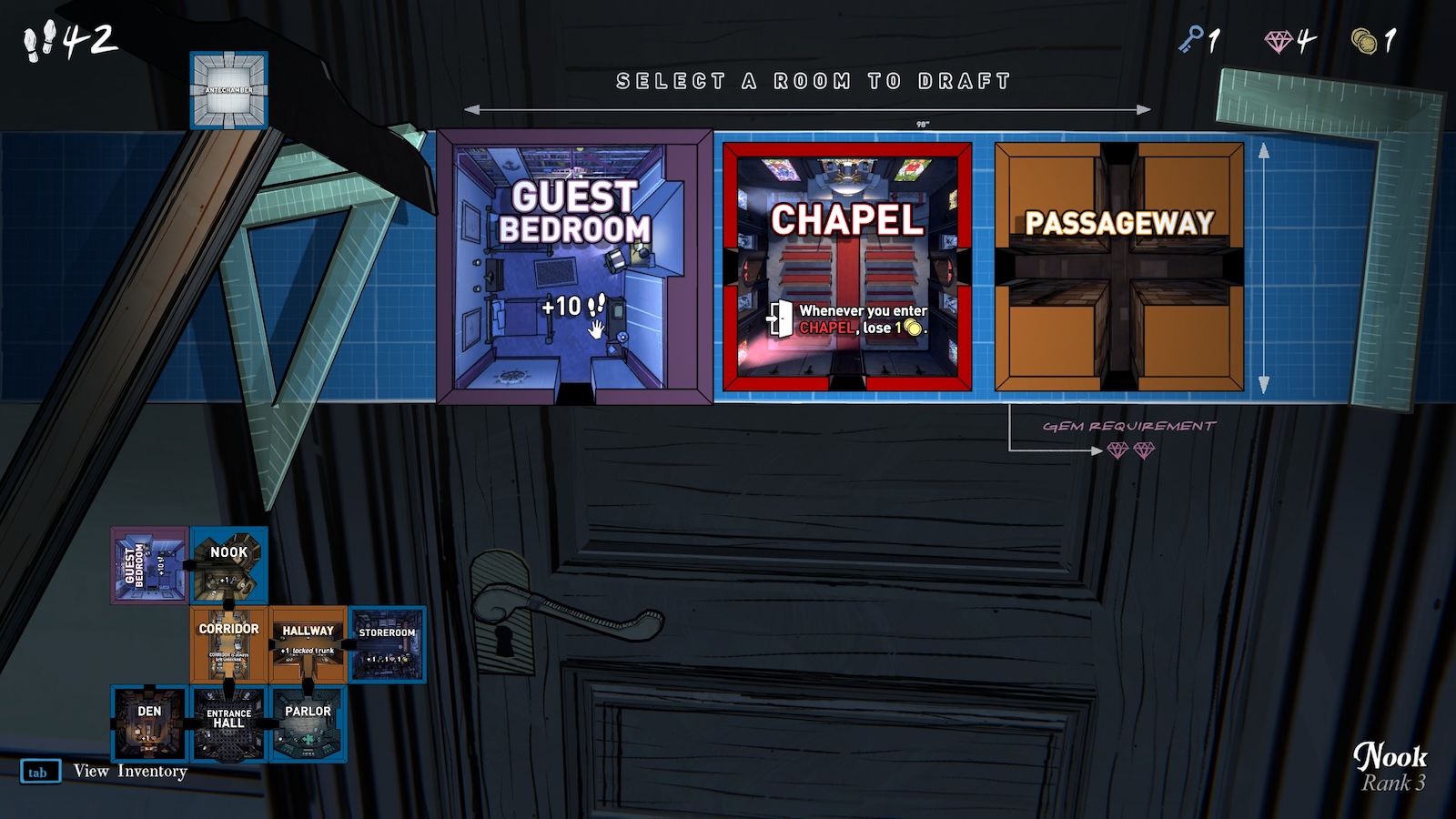
#4 — Blue Prince
Blue Prince is a game about exploring a bizarre and ever-changing mansion in search of its deepest, most cleverly hidden secrets. It’s driven by a roguelike loop in which each successive day resets the mysterious puzzle mansion and the rooms it contains. Every individual run hinges on a surprisingly compelling resource management layer that guides the player’s choices. Meanwhile, across multiple runs, players will unlock crucial upgrades that improve that resource economy, provide more control over the randomness of room selections, or give them easier access to powerful tools.
Blue Prince contains the entire gamut of puzzle game challenges: simple and bounded puzzles with robust rules that escalate with successive attempts like increasing levels, clever observational puzzles that reveal hidden secrets, big picture meta-puzzles that only emerge across several runs, and ultimately a staggeringly deep well of elaborate history and lore belying the game’s most devious and complicated questions. It truly is puzzles all the way down. Every minute bit of storytelling, every odd environmental detail, every quirk of the mansion’s rooms and grounds, it all has some grander meaning just waiting to be discovered.
The deeper you go, the more this game becomes a yawning maze of conspiratorial metaplots and mysteries. On the gaming podcast Side Story, Austin Walker suggests that perhaps “the true ending of the game gives you a choice, and the choice is whether to continue being [Charlie Kelly from the Pepe Silvia meme] or to hit uninstall on Steam.” It’s the kind of game where, long after hitting credits and mucking about in its deeper mysteries, you’ll reach a breaking point and think to yourself “alright, I’m done struggling, I’m just going to look up spoilers for the rest of the game”, and then a few sentences into those spoilers you find yourself closing the tab and going back for just a couple more runs. I may never know the full extent of its secrets, but the hunt itself is too tantalizing to give up on.
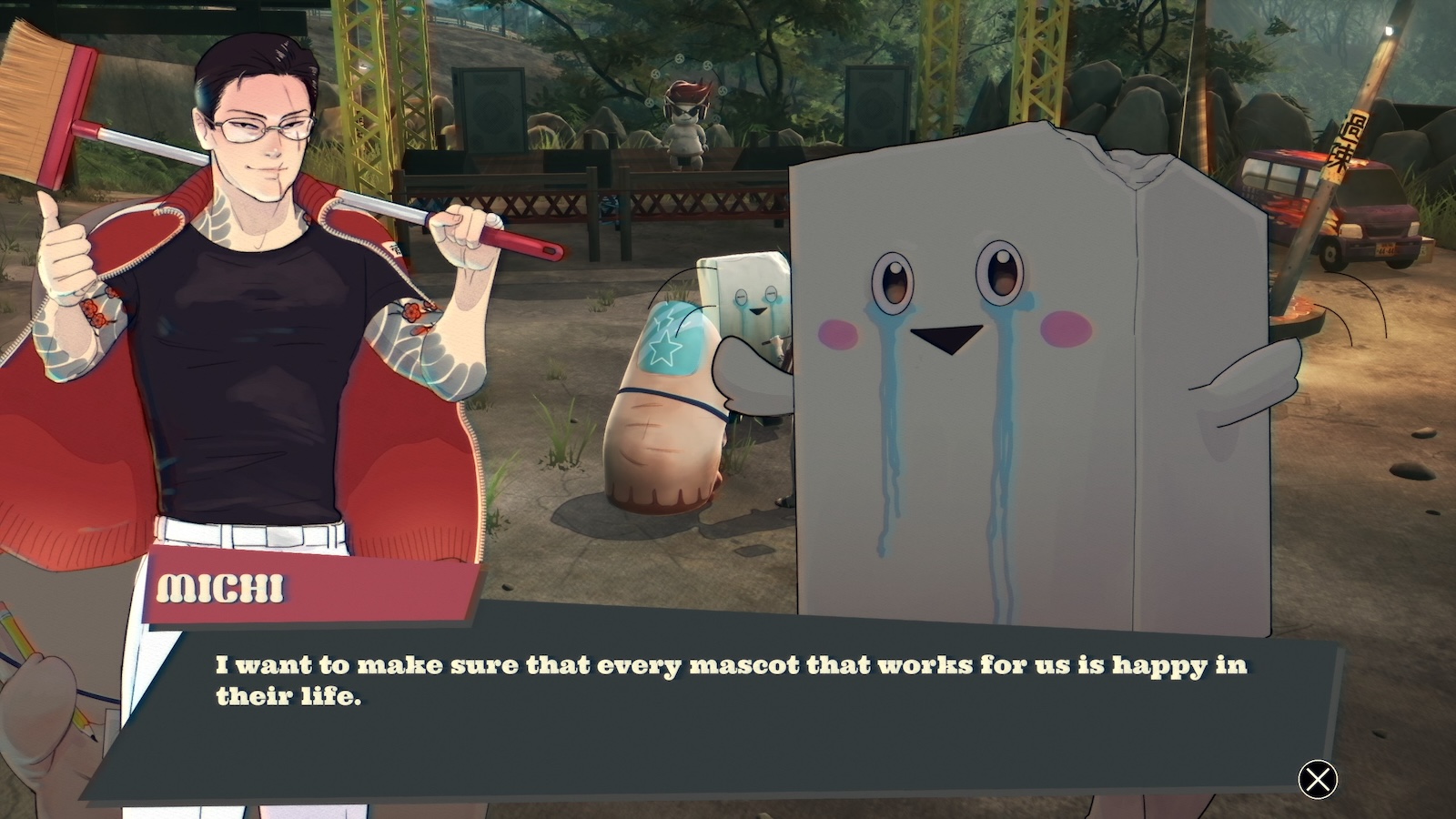
#3 — Promise Mascot Agency
Promise Mascot Agency is extremely weird. That, if anything, is the core of its appeal. Borrowing most heavily from the Yakuza series, it combines a management game with open world exploration in a toy-like kei truck. It leans on crime story trappings for its core narrative thread, following mafioso Michi as he takes the fall for a deal gone south and goes into exile in a rural town that has bad blood with his yakuza family. Thanks to the writers’ wild imagination, the story weaves a grim tale of retribution and civic disenfranchisement with a hopeful and bizarre redemption story, filled to the brim with misfits and weirdos of all sorts.
In many ways, this game boils down to a “checklist game” full of collectibles and repeatable tasks, but its sharp writing, big heart, and strong sense of place make it far far more. Promise Mascot Agency’s characters might be zany but their interiority is taken seriously. It’s not squeamish about labor politics or class dynamics or sex work. Upgrading your truck improves your ability to clean up the town and traverse its hills and satellite islands while building up your mascot agency lets you employ more townsfolk and help promote the businesses of others. It’s all an exercise in putting in the work, rooting out corruption, and bringing a community together by taking their needs seriously.
Like any good open world game, a huge part of its character comes from traversing its world and finding interesting details, both the ones you were looking for and the ones you weren’t. Kaso-Machi is a sad, rundown backwater with a dirtbag mayor and a stagnating economy. It’s full of losers and cynics, hopeful go-getters who have been beaten down and resigned old-timers who have seen too much suffering to get their hopes up again. And most importantly, Promise Mascot Agency loves all of them: it loves their abandoned passions and their faltering hope, it loves Kaso-Machi’s pretty sunsets and its strange landmarks with their quiet magic. It’s a place that clearly has its history and traumas etched into it; the only way you can make something new is to pick up your broom, grab your sassy sidekick, and start bringing the place back to life.
Promise Mascot Agency is wonderful purely on the back of Kaso-Machi and its characters being so fun to discover and fall in love with. Its most heartwarming moments are deeply ridiculous and its most ridiculous moments are strangely heartwarming. I hope it gets more attention as people revisit the year’s releases.
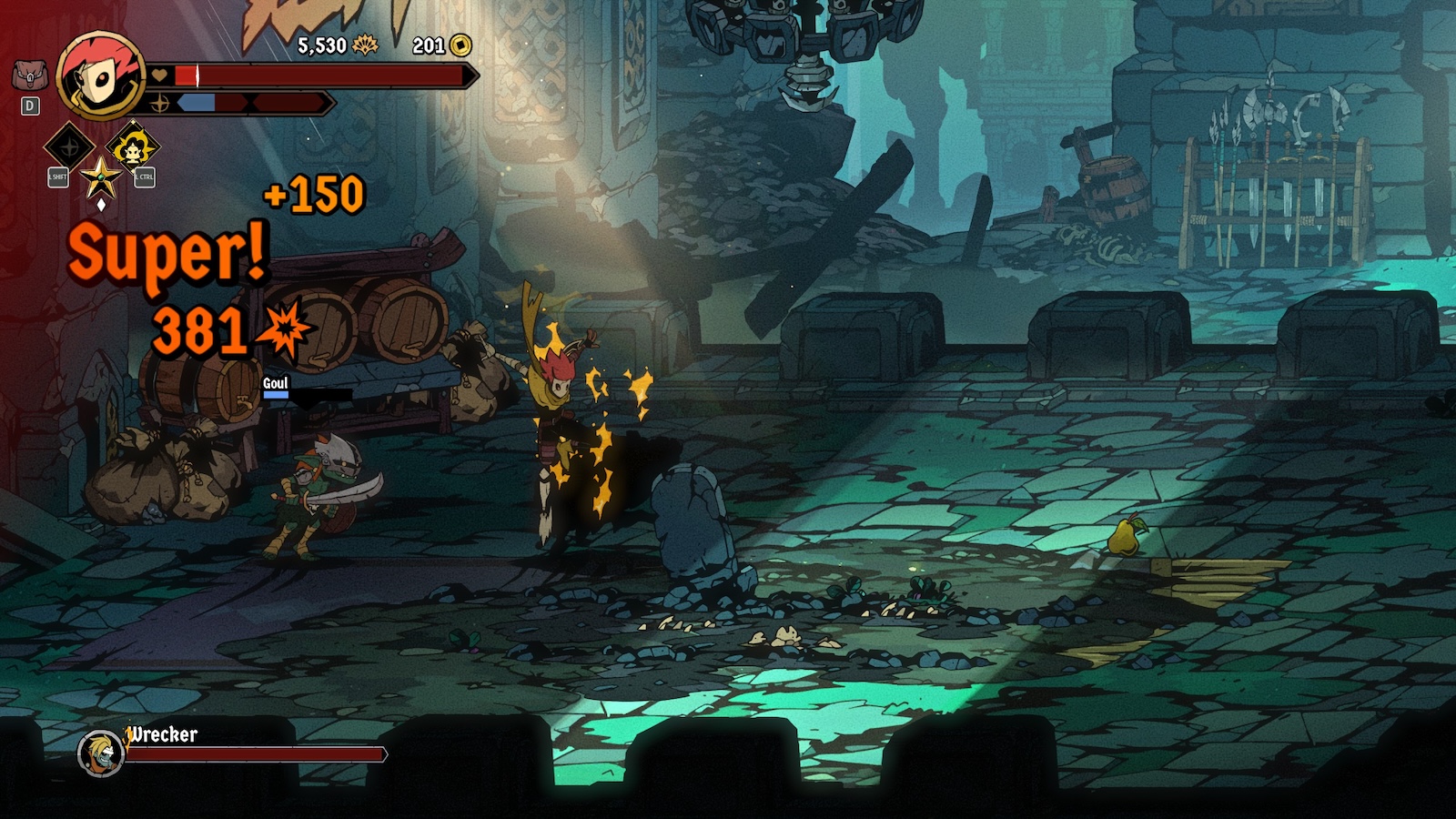
#2 — Absolum
Absolum is a roguelike take on the beat ’em up genre set in an apocalyptic fantasy world with a vibrant comic-book art style. For me, it’s against type; I’ve played a few beat ‘em up games here and there, but I rarely reach for them and I’ve never been especially gripped by their combat. Absolum, it turns out, was the perfect entry point towards greater appreciation. It has the appealingly steep difficulty ramp of roguelikes that rewards skill and practice, but it also stays fresh as players progress further with more resources, abilities, and knowledge.
I think what makes Absolum really special is that it’s such a slick complete package. The story is told first through broad strokes as we learn about the cadre of rebellious sorcerers who hope to claim reclaim the land from a usurper. It leans on its focal characters’ pasts and the legacy of their decimated communities, gradually unraveling into a big picture story through the discoveries that players make when exploring new routes. The beefy soundtrack is packed with catchy tracks and has a few surprising swerves from talented guest composers. The art style is cartoonish and flashy with sharp line work and expressive animations that all read pretty clearly. The world is vibrant and its locations are varied and full of character, frequently yielding new details and secrets to those who look closer and search deeper. Combat is expressive enough to reward various playstyles, and while the build-crafting can feel limited sometimes, it’s augmented by item loadouts that can synergize well if chosen carefully. And to top it all off, it’s great fun to play with a friend in co-op.
Honestly, compared to the other games on this list, Absolum is kind of tough to pitch because it’s simply really good in a conventional way. It’s a smart mashup of core mechanical ideas wrapped in a gorgeous fantasy fable, it’s rarely too self-aware and rarely too self-serious, and it brings a lot of life to its world and characters across runs. Polish and panache have always been crucial to the appeal of the beat ‘em up genre, and Absolum translates those facets to a fantasy setting and roguelike format with unbelievable deftness, making it feel both classic and incredibly fresh at the same time.
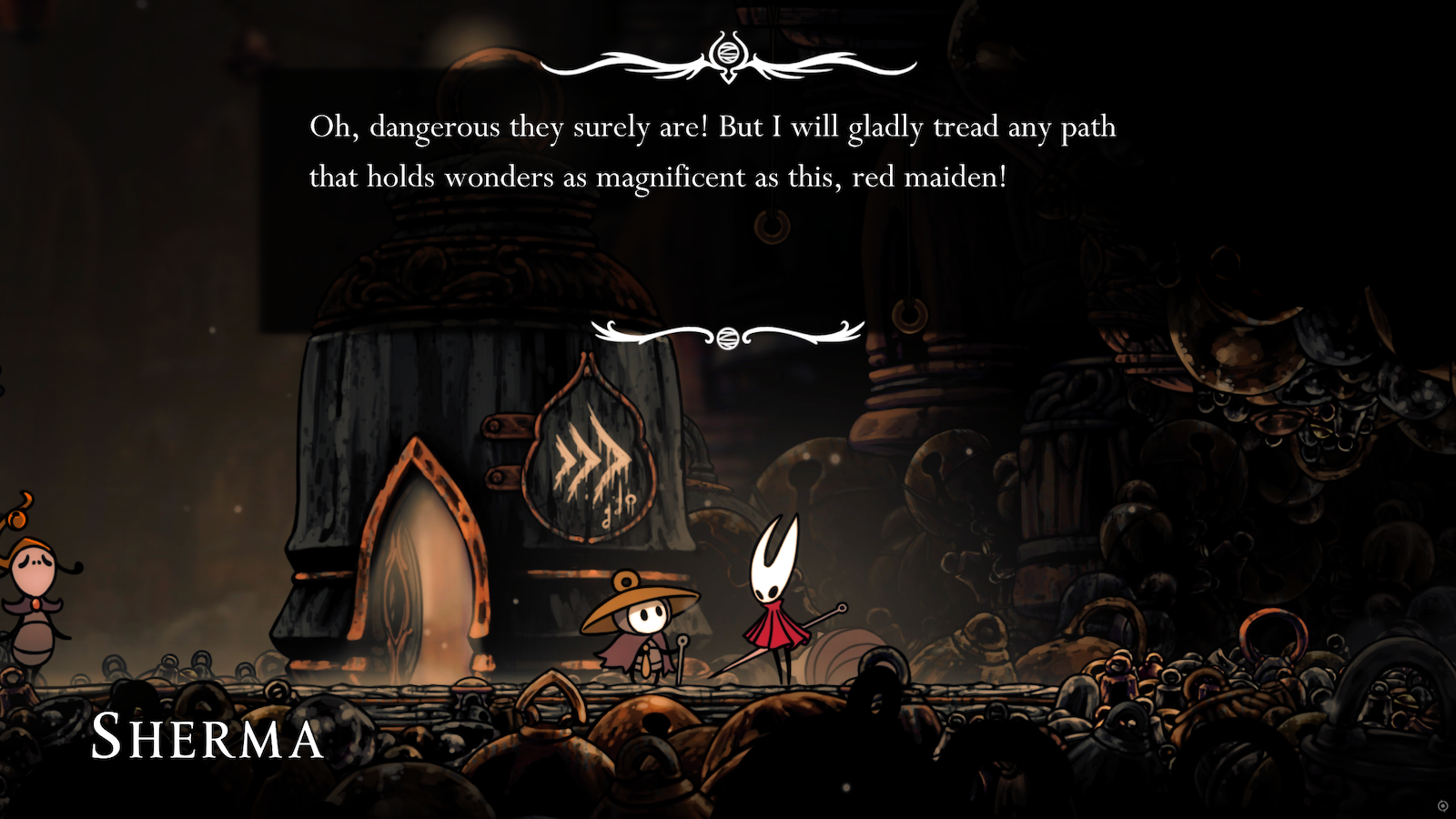
#1 — Hollow Knight: Silksong
I’m sorry to be so predictable, but it couldn’t have been anything else. Hollow Knight (2017) was one of the early stops on my descent into metroidvania fever, and I played it pretty soon after my first forays into the Dark Souls universe as well. It sits at the intersection of my fondest genre affinities and it remains one of the best games of it’s kind, jam-packed with compelling secrets, clever world building flourishes, and memorable and challenging fights. It’s the only game I’ve ever revisited via a randomizer, just so I could explore its infested caverns once more. To follow up a monumental achievement like Hollow Knight would be no small task.
Enter Hollow Knight: Silksong, the breathlessly awaited DLC-turned-sequel that finally emerged from its silken cocoon earlier this year, arriving in the face of the highest expectations I’ve seen since No Man’s Sky. It seemed so unlikely that it could be as good as its predecessor. It seemed impossible that it could somehow top its predecessor.
But you know what? It god damn delivers. Silksong expands on nearly every idea that made Hollow Knight stand out, sometimes subtly and sometimes substantially. To enumerate its every bit of clever iteration would be indulgent and uninteresting, but it’s hard to overstate how perfect an evolution it is. Hornet’s movement is distinct from that of the Knight in ways that seem minor at first, but begin to hold more weight as you learn to traverse the world of Pharloom. The first movement ability that you pick up makes her feel more nimble and acrobatic, arriving just late enough that you’ve come to appreciate the basics before you get it, but immediately emphasizing her distinctive agility. The variety of tools and skills and crests (which change the shape and speed of her attacks) starts at a trickle and slowly grows into a steady flow of new options to experiment with. The two separate currencies that Hornet collects reward both cautious exploration and attentive experimentation with her collection of tools. Difficult challenges lurk around every corner, but nothing is so sturdy that it won’t fall to careful practice, a new loadout, or a future visit. Even dozens of hours into the game, it never runs out of surprises, challenges, and unexpected story beats.
Silksong was such a big deal that it spawned its very own difficulty discourse, a type of controversy that’s typically reserved for titles made by From Software. All manner of arguments were trotted out, some tired and some new, but there was a general feeling that if the difficulty of Silksong alienated you it was kind of big deal because the game was kind of a big deal. To be excluded by it felt bad in a way that would not be true of some niche masocore platformer or galaxy brain puzzler. It was a game of the moment, so feverishly celebrated by its core fanbase that it seemed like it needed to also be a game for everyone. When it couldn’t be, folks were (not unreasonably) upset; if anything, the bitterness of those who bounced off only served to deepen its mystique.
At the end of the day, Silksong is one of those special games that feels so laser targeted at my taste that I doubt whether I’m even remotely qualified to judge if it’s actually “good”. I’m pretty certain that it is—but even if it isn’t, it truly feels like it was made just for me. I don’t get that very often with video games, so it’s only fair to reciprocate and declare it the best game of 2025.